

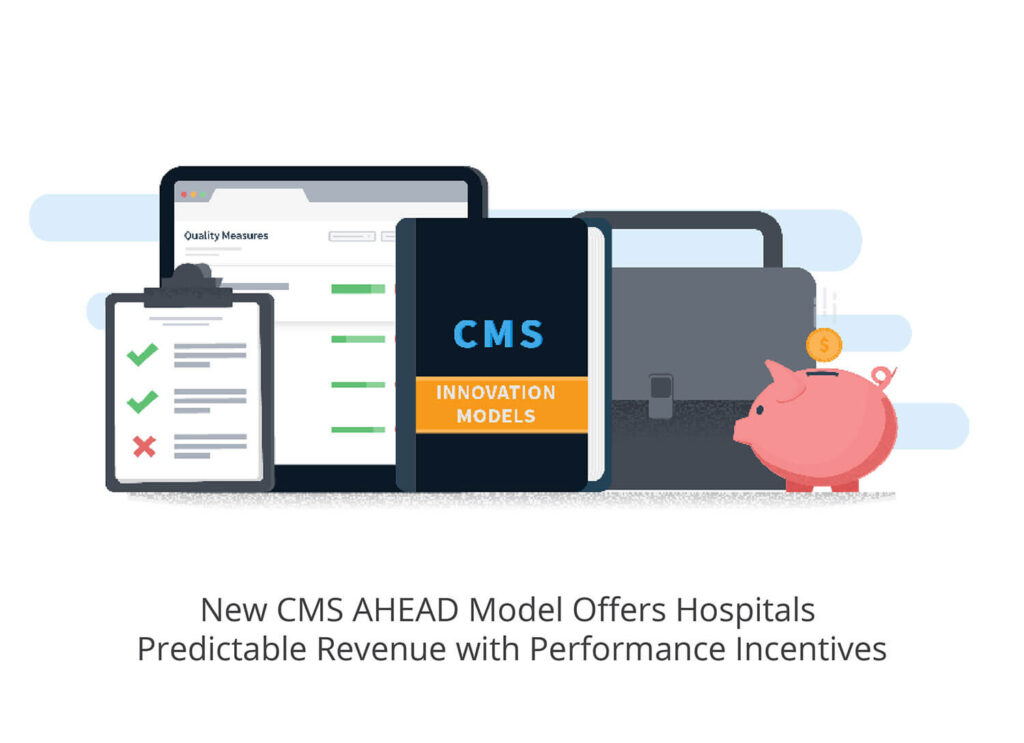
New CMS AHEAD Model Offers Hospitals Predictable Revenue with Performance Incentives
The Centers for Medicare & Medicaid Services (CMS) has unveiled a new initiative called the States Advancing All-Payer Health Equity Approaches and Development (AHEAD) Model. This model aims to improve population health, reduce healthcare disparities, and control costs by testing a combination of hospital global budgets (HGBs) and investments in primary care.
What are Hospital Global Budgets?
Under an HGB system, hospitals receive a fixed annual payment for Medicare inpatient and outpatient services. This provides stability and predictability for hospitals' revenue streams. However, the AHEAD model goes beyond simple fixed payments. Here's a breakdown of the key features:
- Baseline Revenue and Adjustments: A hospital's historical Medicare fee-for-service (FFS) data is used to establish a baseline, adjusted for inflation, demographic shifts, and planned service line changes.
- Performance-Based Adjustments: Hospitals can earn bonuses for exceeding quality metrics and reducing avoidable utilization. Conversely, penalties may apply for falling short.
- Social Risk Adjustment: Hospitals serving communities with high social needs receive an upward adjustment to their budget to account for the additional challenges.
- Transformation Incentive Adjustment: An initial 1% increase is provided in the first two years to encourage early participation.
Benefits and Challenges for Hospitals
The predictability of HGBs is a significant advantage, allowing hospitals to focus on improving care quality without worrying about revenue fluctuations. Additionally, the model supports service line redesign by offering financial support for approved service line additions or removals. For Critical Access Hospitals (CAHs), the model includes modifications to ease participation and encourage investment in rural healthcare transformation.
However, there are also challenges to consider. The methodology currently applies only to Medicare FFS, and participating hospitals may face varying reimbursement schemes from other payers. Additionally, pre-approval for service line changes adds an administrative burden, and hospitals might be concerned about factors beyond their control impacting their budgets, such as total cost of care performance in the region.
What's Next?
States interested in participating in the first two cohorts had an application deadline of March 18, 2024. Applications for the third cohort are due on August 12, 2024. Hospitals can express their interest to their state during the application process.
The AHEAD model presents a unique opportunity for hospitals to improve population health and manage costs within a predictable revenue framework. However, careful consideration of the model's features and potential challenges is crucial before opting in.
Source
https://www.jdsupra.com/legalnews/understanding-cms-ahead-model-medicare-2966298/